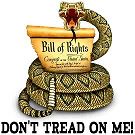
On this day in 1776, the Virginia Assembly unanimously adopted George Mason's Declaration of Rights, which guaranteed, among other things, the equal right to "life, liberty and property" (though it did little for the slaves that these same men kept in bondage). Mason's Declaration of Rights has long been hailed as the the front runner to the Bill or Rights, which was later amended to the federal constitution.
Mason's main source of inspiration came from the English Bill of Rights (1689), which guaranteed certain rights -- the right to petition, bear arms, protection from cruel and unusual punishment being among them -- to the English citizenry. This Bill of Rights, which essentially served as a social contract of sorts between the English people and William of Orange and Mary prior to their ascension to the English throne, was hailed as one of the greatest manifestations of individual liberty in the western world. Obviously British citizens living in the American colonies would have found the document to be of tremendous value, especially once the fires of revolution were ignited.
One of the most interesting parts of the Declaration of Rights -- which is actually at the very end of the document -- is Section 16, which states:
That religion, or the duty which we owe to our Creator, and the manner of discharging it, can be directed only by reason and conviction, not by force or violence; and therefore all men are equally entitled to the free exercise of religion, according to the dictates of conscience; and that it is the mutual duty of all to practise Christian forbearance, love, and charity toward each other.
Mason repeated these same sentiments in his private correspondence when he wrote:
That as Religion, or the Duty which we owe to our divine and omnipotent Creator, and the Manner of discharging it, can be governed only by Reason and Conviction, not by Force or Violence; and therefore that all Men shou'd enjoy the fullest Toleration in the Exercise of Religion, according to the Dictates of Conscience, unpunished and unrestrained by the Magistrate, unless, under Colour of Religion, any Man disturb the Peace, the Happiness, or Safety of Society, or of Individuals. And that it is the mutual Duty of all, to practice Christian forbearance, Love and Charity towards Each other (The Papers of George Mason, ed. Robert Rutland, Vol. 1, 278).
Whenever we hear the never ending church/state arguments, I am amazed at the fact that very few people recognize the profound impact of Mason's declarations. Mason not only drives the message home for those who would argue against a church/state separation, but he virtually leaves no room for argument. If Mason's work left any impact on the drafting of the Bill of Rights -- and they most certainly did -- then why are some people continuing to argue this point?