I was talking with a group of friends last night about the early history of this country when somebody made the statement that, "the Founding Fathers protected slavery because they knew no better." I was not surprised by this comment. It seems that most Americans have embraced this delusional belief as American doctrine. We simply hate to admit that our country (like all the rest) have skeletons in the closet.
Being the loudmouth that I am, I was unable to remain silent, but instead tried to explain a few things I have learned over the years. I showed my friend my copy of Gary Nash's book Race and Revolution, which has a number of primary source documents from slaves. I explained that literally thousands of slave petitions were sent to the various colonial officials, all demanding immediate emancipation.
And there are literally thousands of documents from slaveholders, which prove the fact that these colonials had a perfect understanding of the evils of slavery. Thomas Jefferson even stated that, "If there is a just god in heaven we will pay dearly for what has been done to the Negroes."
To make the idiotic claim that the colonial generation knew no better is both foolish and irresponsible. I understand the need for Americans to cherish their history. I am in total agreement with that. But there is no excuse for attempting to obscure our misdeeds. When we learn the TRUE nature of our history, the more noble it becomes.
I have attached one of the thousands of slave pateitions for you all to read. It is one of my favorites, because it proves that the slaves were anything but ignorant of the sweeping winds of revolution:
Boston, April 20th, 1773.
Sir, The efforts made by the legislative of this province in their last sessions to free themselves from slavery, gave us, who are in that deplorable state, a high degree of satisfaction. We expect great things from men who have made such a noble stand against the designs of their fellow-men to enslave them. We cannot but wish and hope Sir, that you will have the same grand object, we mean civil and religious liberty, in view in your next session. The divine spirit of freedom, seems to fire every humane breast on this continent, except such as are bribed to assist in executing the execrable plan.
We are very sensible that it would be highly detrimental to our present masters, if we were allowed to demand all that of right belongs to us for past services; this we disclaim. Even the Spaniards, who have not those sublime ideas of freedom that English men have, are conscious that they have no right to all the services of their fellow-men, we mean the Africans, whom they have purchased with their money; therefore they allow them one day in a week to work for themselves, to enable them to earn money to purchase the residue of their time, which they have a right to demand in such portions as they are able to pay for (a due appraizement of their services being first made, which always stands at the purchase money.) We do not pretend to dictate to you Sir, or to the Honorable Assembly, of which you are a member. We acknowledge our obligations to you for what you have already done, but as the people of this province seem to be actuated by the principles of equity and justice, we cannot but expect your house will again take our deplorable case into serious consideration, and give us that ample relief which, as men, we have a natural right to.
But since the wise and righteous governor of the universe, has permitted our fellow men to make us slaves, we bow in submission to him, and determine to behave in such a manner as that we may have reason to expect the divine approbation of, and assistance in, our peaceable and lawful attempts to gain our freedom.
We are willing to submit to such regulations and laws, as may be made relative to us, until we leave the province, which we determine to do as soon as we can, from our joynt labours, procure money to transport ourselves to some part of the Coast of Africa, where we propose a settlement. We are very desirous that you should have instructions relative to us, from your town, therefore we pray you to communicate this letter to them, and ask this favor for us.
In behalf of our fellow slaves in this province, and by order of their Committee.
Peter Bestes,
Sambo Freeman,
Felix Holbrook,
Chester Joie.
Showing posts with label Primary Sources. Show all posts
Showing posts with label Primary Sources. Show all posts
Wednesday, January 16, 2008


Wednesday, January 9, 2008
Paine Publishes "Common Sense"

232 years ago, an unknown and obscure former sailor and schoolteacher published one of the biggest blockbuster pieces in American political history: Common Sense. Thanks in part to a personal letter of reccomendation from Benjamin Franklin, the 39 year old Thomas Paine made his way from his native England to Pennsylvania. Once there, Paine was overcome by the rapid wave of revolution that was sweeping the American countryside. Despite this wave of revolutionary fervor, however, Americans were still (for the most part) reluctant to declare their independence from Britain. As one historian put it...
At the time Paine wrote "Common Sense," most colonists considered themselves to be aggrieved Britons. Paine fundamentally changed the tenor of colonists' argument with the crown when he wrote the following: "Europe, and not England, is the parent country of America. This new world hath been the asylum for the persecuted lovers of civil and religious liberty from every part of Europe. Hither they have fled, not from the tender embraces of the mother, but from the cruelty of the monster; and it is so far true of England, that the same tyranny which drove the first emigrants from home, pursues their descendants still."

We cannot overemphasize the role that Paine's Common Sense played in shaping the views of the American colonists. By July of 1776, Common Sense had been read by roughly 1/3 of the American population (a huge number for the colonial era). His work sold 500,000 copies in a year's time, propelling Paine to the vanguard of American revolutionary politics. It is not a stretch of the imagination to proclaim Common Sense as the 47 pages that changed America.
What I find disturbing, however, is the fact that Paine's Common Sense is vitrually unknown and unread today. In a recent survey, only 24% of American had heard of Common Sense and even less had read it. Maybe somebody should explain to the public that Common Sense was the colonial world's Harry Potter. Maybe then they would give it a chance.
Tuesday, January 8, 2008
Washington Delivers First Ever State of the Union Speech

Article II, Section 3 of the Constitution states that the President of the United States is required to...
"...from time to time give to the Congress Information of the State of the Union, and recommend to their consideration such Measures as he shall judge necessary and expedient;..."
On January 8, 1790 President George Washington delivered the first ever State of the Union address. His address was highly anticipated by virtually everyone in Congress, since nobody was quite sure how the Executive branch was to work. In his speech, Washington clearly stated his administration's expected course of action. With a tremendous amount of help from Alexander Hamilton, Washington dedicated his administration to strengthening the federal government. One of Washington's primary goals was to strengthen the national defense by creating a standing army (an idea that was very unpopular at the time). Washington suggested that one of the primary goals of the federal government was to "provide for the common defense."
I have attached a copy of Washington's first State of the Union address below. It is a wonderful document, and I encourage you to take the time to read it. Enjoy!
State of the Union
George Washington
January 8, 1790
Federal Hall, New York City
Fellow Citizens of the Senate and House of Representatives:
I embrace with great satisfaction the opportunity which now presents itself of congratulating you on the present favorable prospects of our public affairs. The recent accession of the important state of north Carolina to the Constitution of the United States (of which official information has been received), the rising credit and respectability of our country, the general and increasing good will toward the government of the Union, and the concord, peace, and plenty with which we are blessed are circumstances auspicious in an eminent degree to our national prosperity.
In resuming your consultations for the general good you can not but derive encouragement from the reflection that the measures of the last session have been as satisfactory to your constituents as the novelty and difficulty of the work allowed you to hope. Still further to realize their expectations and to secure the blessings which a gracious Providence has placed within our reach will in the course of the present important session call for the cool and deliberate exertion of your patriotism, firmness, and wisdom.
Among the many interesting objects which will engage your attention that of providing for the common defense will merit particular regard. To be prepared for war is on e of the most effectual means of preserving peace.
A free people ought not only to be armed, but disciplined; to which end a uniform and well-digested plan is requisite; and their safety and interest require that they should promote such manufactories as tend to render them independent of others for essential, particularly military, supplies.
The proper establishment of the troops which may be deemed indispensable will be entitled to mature consideration. In the arrangements which may be made respecting it it will be of importance to conciliate the comfortable support of the officers and soldiers with a due regard to economy.
There was reason to hope that the pacific measures adopted with regard to certain hostile tribes of Indians would have relieved the inhabitants of our southern and western frontiers from their depredations, but you will perceive from the information contained in the papers which I shall direct to be laid before you (comprehending a communication from the Commonwealth of Virginia) that we ought to be prepared to afford protection to those parts of the Union, and, if necessary, to punish aggressors.
The interests of the United States require that our intercourse with other nations should be facilitated by such provisions as will enable me to fulfill my duty in that respect in the manner which circumstances may render most conducive to the public good, and to this end that the compensation to be made to the persons who may be employed should, according to the nature of their appointments, be defined by law, and a competent fund designated for defraying the expenses incident to the conduct of foreign affairs.
Various considerations also render it expedient that the terms on which foreigners may be admitted to the rights of citizens should be speedily ascertained by a uniform rule of naturalization.
Uniformity in the currency, weights, and measures of the United States is an object of great importance, and will, I am persuaded, be duly attended to.
The advancement of agriculture, commerce, and manufactures by all proper means will not, I trust, need recommendation; but I can not forbear intimating to you the expediency of giving effectual encouragement as well to the introduction of new and useful inventions from abroad as to the exertions of skill and genius in producing them at home, and of facilitating the intercourse between the distant parts of our country by a due attention to the post-office and post-roads.
Nor am I less persuaded that you will agree with me in opinion that there is nothing which can better deserve your patronage than the promotion of science and literature. Knowledge is in every country the surest basis of public happiness. In one in which the measures of government receive their impressions so immediately from the sense of the community as in ours it is proportionably essential.
To the security of a free constitution it contributes in various ways - by convincing those who are intrusted with the public administration that every valuable end of government is best answered by the enlightened confidence of the people, and by teaching the people themselves to know and to value their own rights; to discern and provide against invasions of them; to distinguish between oppression and the necessary exercise of lawful authority; between burthens proceeding from a disregard to their convenience and those resulting from the inevitable exigencies of society; to discriminate the spirit of liberty from that of licentiousness - cherishing the first, avoiding the last - and uniting a speedy but temperate vigilance against encroachments, with an inviolable respect to the laws.
Whether this desirable object will be best promoted by affording aids to seminaries of learning already established, by the institution of a national university, or by any other expedients will be well worthy of a place in the deliberations of the legislature.
Gentlemen of the House of Representatives:
I saw with peculiar pleasure at the close of the last session the resolution entered into by you expressive of your opinion that an adequate provision for the support of the public credit is a matter of high importance to the national honor and prosperity. In this sentiment I entirely concur; and to a perfect confidence in your best endeavors to devise such a provision as will be truly with the end I add an equal reliance on the cheerful cooperation of the other branch of the legislature.
It would be superfluous to specify inducements to a measure in which the character and interests of the United States are so obviously so deeply concerned, and which has received so explicit a sanction from your declaration.
Gentlemen of the Senate and House of Representatives:
I have directed the proper officers to lay before you, respectively, such papers and estimates as regard the affairs particularly recommended to your consideration, and necessary to convey to you that information of the state of the Union which it is my duty to afford.
The welfare of our country is the great object to which our cares and efforts ought to be directed, and I shall derive great satisfaction from a cooperation with you in the pleasing though arduous task of insuring to our fellow citizens the blessings which they have a right to expect from a free, efficient, and equal government.
Monday, December 17, 2007
America's Jubilee

President John Quincy Adams, the Republic’s 6th executive chief, awoke around 7:00a.m. to a rainy, but sunny day in the nation’s capital. The thermometer read 78 degrees, and the clouds looked as though they would soon disappear. Today was going to be a beautiful day. After a brief breakfast, the President met with his cabinet in the Executive Mansion and then made his way via the Presidential carriage to the capital building. A large procession, complete with military escort, trumpeters, cavalry, and a military band accompanied the President. An energized crowd gathered to watch the spectacle, eager to commence the day’s festivities. After all, today was no ordinary day. Today was America’s Jubilee: July 4, 1826!!!
"America's Jubilee" was arguably the most festive July 4th our country has ever celebrated. Parades, festivals, dances, etc. were held all throughout the infant nation in celebration of America's 50th birthday. Even the legendary Marquis de Lafayette was welcomed back with the highest of pomp and circumstance. A countless number of songs and poems were written to commemorate this landmark day. Here is one of my favorite that I found on an old broadside. The poem was written by a woman from Philadelphia named K.A. Ware:
The deeds of our heroes, their courage sublime,
Have long been the pride, and the theme of our story
And their triumphs shall mark the divisions of time,
And be hallow’d as the Epochs of National glory!
On this festival Day,
Our glad homage we’ll pay
To the God of the Pilgrims! who lighted their way,
And ne’er shall his flame on our altars decline,
Till earth shall to chaos her empire resign!
As the festivities commenced and the congregations assembled, two aristocratic patriots were about to cross the ultimate threshold between this world and the next. John Adams and Thomas Jefferson, two of the most important figures of the American Revolution, would expire on the very same day...America's Jubilee.
Of course it would take some time for the news of their deaths to spread across the countryside, but when it did Americans were left in shock. for Jefferson and Adams to die on the 50th anniversary of American independence was almost too surreal to believe. As one historian put it, "It was as if god himself had put his final stamp of approval on the great American experiment."
America's Jubilee is one of those rare instances when divine fate seemed to sweep across the nation like a wildfire. Even Jefferson, who was never one for divine intervention or religious rhetoric, seemed to get caught up in the spirit of "America's Jubilee." In one of his last letters to John Adams, Jefferson seems to support the notion that America's destiny was sanctioned by deity. In almost prophetic form, Jefferson wrote:
"We shall have our follies without doubt. Some one or more of them will always be afloat. But ours will be the follies of enthusiasm, not bigotry. Bigotry is the disease of ignorance, of morbid minds; enthusiasm of the free and buoyant. Education and free discussion are the antidotes of both. We are destined to be a barrier against the returns of ignorance and barbarism. Old Europe will have to lean on our shoulders and hobble along by our side, under the monkish trammels of priests and kings."
America's Jubilee is one of those stories that is both captivating and mindboggling. I'm amazed that it hasn't received more attention by the historical community.
Saturday, December 15, 2007
217 Years Ago
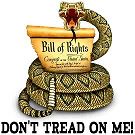
On this day, 217 years ago, the Bill of Rights became law. This was the culmination of literally decades of struggle dating back all the way to the Declaration of Independence. After eight years of bloody conflict, combined with several more years of civil discontent, the United States had finally created a system of laws that proctected individual liberty. James Madison, the origonal mastermind of the Constitution and the Bill of Rights, was able to push this document to the forefront of governmental affairs. For the longest time most of America's early leaders wanted nothing to do with a Bill of Rights, but Madison would not take no for an answer. His political genious and tireless effort finally got the Bill of Rights to be accepted. This document has maintained some of our basic freedoms (more or less) for over two centuries.
Tuesday, November 27, 2007
Remembering the Articles of Confederation

The Articles of Confederation are one of the most neglected and overlooked aspects of the American Revolution. It is often clouded by the grandiose history of the Declaration of Independence and the Constitution (not that those documents are undeserving). Many students today have never even heard of the Articles of Confederation. Though their legacy may not be as grand as other historical documents, no true historian can ignore their massive importance in the American Revolution saga. As historian Donald Lutz of the University of Houston put it:
"The Articles functioned as the first national constitution of the United States and, as such, reflected American political theory as it emerged during the Revolution. Equally important, a textual analysis reveals the extent to which the 1787 Constitution was a logical extension of the Articles of Confederation. Most of the Articles were incorporated in the U.S. Constitution, and several key changes found in the later document were present in embryo in the Articles of Confederation."
To understand the federal government and the Constitution one must first understand the Articles of Confederation. It was an essential first step in shaping American political ideology. One also gains a greater appreciation for the truly remarkable achievement that was the Constitution when we consider that the Articles of Confederation was THE governmental system of the United States. In essence, the Constitutional Convention was a bloodless coup d'etat when we consider the role of the Article of Confederation.
In addition, understanding the Federalist Papers (and anti-Federalist Papers) can only be accomplished with a strong understanding and knowledge of the Articles of Confederation.
Of course we must also keep in mind the limitations of the Articles of Confederation. After all, they were replaced with a more centralized system of government created under the Constitution. James Madison called the Articles, "a blessed stumbling block that re-charted America's course." Despite its faults, the Articles of Confederation should be remembered as a critical stepping-stone in what the founders have called, "The American experiment."
Thursday, November 22, 2007
Happy Colonial Thanksgiving
The first Thanksgiving address from the "father" of our nation. Click to enlarge:


Friday, November 16, 2007
Did George Washington Pray at Valley Forge?

Nearly every American has seen this painting. In fact, it has become one of the best selling pieces of art in recent years. Homes, churches, office buildings, etc decorate their walls with this extremely powerful portrayal of America's first president. Completed in 1976 by Arnold Friberg, the painting was in commemoration of America's bicentennial festivities. But how accurate is it? Recent inquiry into the religious life of George Washington has uncovered some interesting findings. Did Washington actually pray at Valley Forge?
The original story of George Washington kneeling in prayer comes from a source that is questionable to say the least. The story allegedly came from an Isaac Potts, who is the supposed eyewitness to this event. It is said that Potts was riding along one day when he came across General Washington, hidden in the woods and in deep prayer. Potts, who was against the war, allegedly had a change of heart upon seeing the General in prayer. This story went unreported for roughly 40 years until Reverend Nathaniel Snowden revealed the story, which he had recorded in his journal. Here is an excerpt from that journal:
I tied my horse to a sapling & went quietly into the woods & to my astonishment I saw the great George Washington on his knees alone, with his sword on one side and his cocked hat on the other. He was at Prayer to the God of the Armies, beseeching to interpose with his Divine aid, as it was ye Crisis, & the cause of the country, of humanity & of the world.
Such a prayer I never heard from the lips of man. I left him alone praying. I went home & told my wife. I saw a sight and heard today what I never saw or heard before, and just related to her what I had seen & heard & observed. We never thought a man c’d be a soldier & a Christian, but if there is one in the world, it is Washington. She also was astonished. We thought it was the cause of God, & America could prevail.
The powerful imagery of General Washington beseeching God to bless and protect his army is moving to say the least. The problem with the story, however, is that there is no proof that Rev. Snowden ever or knew met Isaac Potts. In fact, there are several problems in the Journal entry. Snowden records the name of Potts's wife to be Sarah, when in fact her name was Martha. The family biographers of the Potts family also point out that Isaac Potts did not work at or around Valley Forge until after the war. Some historians have even suggested that Snowden later reported the story to be somewhat inaccurate, when faced with the evidence. Joseph Ellis, a biographer of Washington, has even pointed out specific moments when Washington recorded the fact that he detested praying on his knees.
This story has received incredible publicity and attention over the years. In 1866, artist John McRae was commissioned by the United States to create an engraving of this event.

Later, the Valley Forge Park Commission was given a grant to create a statue of McRae's engraving, which was to be placed at the entrance to Valley Forge Park. The Park authorities refused, stating that there was ample evidence to suggest that the Washington prayer story was a hoax. Despite the decision of park authorities, tours were conducted until roughly 1930, which took travelers to various locations where Washington had allegedly knelt in prayer.
Despite your personal feelings, the Prayer at Valley Forge has become an important symbol for millions of Americans. Even if it is a fraud (and there is a lot of evidence to suggest so), the story of America's first Commander-in-Chief kneeling in prayer has been a source of inspiration for generations of Americans.
Thursday, November 8, 2007
A Relic of the Revolution

A little over a year ago, this flag from a Connecticut regiment of colonial soldiers, was auctioned off in New York for $17.4 million. The origional owners of the flag were the decendants of a British soldier that captured the flag over 220 years ago. Upon his return to England, the flag became a family heirloom, handed down from generation to generation. It wasn't until 2006 that the decendants of this British soldier decided to auction off the flag at an American aution. The flag, which has been exceptionally cared for, is one of the best conditioned flags of the revolutionary era. If you look closely, you can still see a blood stain left from a colonial soldeir that was either killed or wounded. This certainly brings the reality of the American Revolution (which can often be forgotten in the study of history) to life. The anonyous bidder has stated that he plans to sell the flag to the Smithsonian in the near future.
Monday, October 29, 2007
Influence of Franklin's "Join or Die"
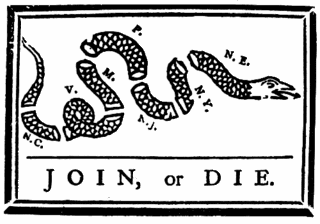
In early 1754, Philadelphia printer Benjamin Franklin became one of the earliest political cartoonists in American history. As a printer, Franklin had regularly published political commentaries on various issues. His "Join or Die" publication, however, was quite different and would be remembered for generations to come.
During the early part of 1754, Franklin became quite concerned about the security and future of the British colonies. He believed that each individual colony was going too far in its own direction, and thus neglecting the need for unity. As a result, Franklin created this early political cartoon that served as a call for unity. The cartoon (originally done as a wood carving) was posted not only in Franklin's paper, but was distributed across the colonies. The snake (each section representing an individual British colony), was purposely cut into pieces, suggesting that death would come not only to the snake, but to the colonies as well if they chose to stay divided. (It is also worth noting that 18th century society believed that a snake would come back to life if the pieces were all put together and buried before sundown).
During the French and Indian War, Franklin's "Join or Die" slogan was used as a battle cry, inspiring colonies to unite against the French. In the years prior to the American Revolution, Franklin would again use his "Join or Die" logo to promote union with the British (Franklin even suggested to Parliament that the colonies could be joined with Great Britain in the original Acts of Union, which had united Scotland and England). England's passage of the Stamp Act in 1765 gave Americans a cause to rally around. Naturally, Franklin's slogan was brought out of the closet, this time to rally against the British.
With the onset of the American Revolution, patriots from across the colonies used Franklin's "Join or Die" to promote the cause of independence. The slogan could regularly be seen in the windows of shops, on flags, and in newspapers.
Years later, Northerners would again resurrect Franklin's political cartoon to promote the cause of unity in the early years of the Civil War. There are even more recent instances of "Join or Die" being used to promote a political cause. During the 2000 presidential election, Republicans raised the banner of "Join or Die" to promote unity in the party. I guess this is proof that political cartoons may evolve, but the "classics" never die. I'm sure we have not seen the end of Benjamin Franklin's "Join or Die" slogan.
Subscribe to:
Posts (Atom)