In a letter to his wife Abigail, John Adams wrote: "The Second Day of July 1776, will be the most memorable Epocha, in the History of America."
Adams' prediction came as the result of Richard Henry Lee's motion for independence being approved by the Congress on July 2, 1776. It was Lee's motion that officially separated the thirteen American colonies from Great Britain.
A confident and euphoric Adams declared:
"I am apt to believe that it will be celebrated, by succeeding Generations, as the great anniversary Festival. It ought to be commemorated, as the Day of Deliverance by solemn Acts of Devotion to God Almighty. It ought to be solemnized with Pomp and Parade, with Shews, Games, Sports, Guns, Bells, Bonfires and Illuminations from one End of this Continent to the other from this Time forward forever more."
Adams would be two days off from his prediction, however. On July 4, the day after writing Abigail, Adams joined with the rest of his colleagues in approving the Declaration of Independence, a document that eloquently articulated the reasons why the colonies had separated from the British Empire.
It was this vote - the one on July 4 - that would go down in history as a "memorable Epocha."
Showing posts with label Declaration of Independence. Show all posts
Showing posts with label Declaration of Independence. Show all posts
Thursday, July 2, 2009


Thursday, December 20, 2007
The Religion of the Founding Fathers

This posting is inspired by the comments made in the Huckabee posting below. Raven mentioned that he is opposed to the notion that the Founding Fathers were Christian men. Obviously this is a very popular and controversial topic, so I am expecting this post to be a lot of fun. I look forward to what you all have to say.

In his book The Faiths of the Founding Fathers (which I happen to believe is the best source on this issue), author David Holmes has created a religious test of sorts that I feel is very applicable. Holmes states that, "An examination of history cannot capture the inner faith of any man. But in the case of the Founding Fathers of the United States, readers can use these four indicators to locate the founders on the religious spectrum with some confidence." Holmes has devised a four-point test that I believe is very helpful in understanding the religious nature of the Funding Fathers. These four points allow us to put the faiths of the Founding Fathers into perspective. The points are:
1. Church Attendance
2. Approach to the Sacraments and Ordinances
3. Level of Church Activity and Involvement
4. The Type of Religious Language Used
Using these four criteria, Holmes states where each of the Founding Fathers ranks on the religious spectrum. First off, it is important that we recognize the role that the Enlightenment and the Great Awakening played in shaping the religious beliefs of colonial America. As Daniel Walker Howe states in his epic book What Hath God Wrought, religious ideology, especially Christian ideology, was very different during the colonial era than it is today. By looking at these four points, we can determine to what degree deism and Christianity influenced the individual.
There is of course many other factors than these simple four points, which shaped the individual beliefs of our Founding Fathers. These points, however, can help us see the impact of deism and Christianity on the individual. A deist would be more likely to attend church less frequently, would strongly oppose sacraments and ordinances, would have a low level of church involvement, and would use very neutral religious language when referring to deity. An orthodox Christian, however, would be the exact opposite. With that said, let us look at several of the Founding Fathers using the test provided by Holmes.
George Washington: Obviously Washington is the most popular of the Founding Fathers, and there is a great deal of religious myth that surrounds him. There is perhaps more written on the religious views of Washington than any other Founding Father. His legacy has been used by secularists and religious zealots alike, in order to shape their respective agendas. But what were his religious beliefs? Here is what Holmes states:
1.) Church Attendance: Washington, though not as devout as the typical orthodox of his day, did attend church with some regularity, and as Holmes states, “held organized religion in high regard, and was known to pray privately.”
2.) Approach to the Sacraments and Ordinances: Washington was known for regularly leaving church services before any and all sacraments. Washington strictly refused to partake in any other religious ordinances.
3.) Level of Church Activity and Involvement: Washington was a vestryman in both the Anglican and Episcopal churches, but was never confirmed in any church. Washington strongly opposed any orthodox allegiance to any one church, and remained a non-ordained, non-confirmed churchgoer.
4.) Religious Language Used: Washington’s religious vernacular was mixed with Deist and Christian phrases. Though he regularly referred to deity as “Providence” and “the Grand Architect” Washington also used the words “God” and “Christ” on a regular basis as well.
So where does Holmes rank Washington? He calls him a “Christian Deist.”
Thomas Jefferson
This one is almost too easy. Jefferson attended very little church, he never participated in sacraments and ordinances, was never ordained or confirmed (in fact he believed such practices were morally reprehensible), and his religious language was VERY common for a Deist (just look at the Declaration of Independence where Jefferson uses phrases like "Providence" and "Nature's God"). Jefferson also regularly denied the divinity of Christ, but referred to him as "the greatest philosopher." In his Bible, Jefferson even removed all references to Jesus being a savior figure.
Holmes states, and I strongly agree, that Jefferson was a non-Christian Deist. This one is pretty easy.
Benjamin Franklin
Franklin is an interesting figure. He donated a large amount of money to virtually every religion in Philadelphia and even attended most of them. Franklin, however, was never confirmed, nor did he participate in sacraments and ordinances of any church. Franklin even states in his autobiography that he denies the divinity of Jesus. Holmes also calls Franklin a Deist.
So where are the Orthodox Christians? Here is just a small list:
Patrick Henry
Samuel Adams
John Jay
Martha Washington
Charles Carrol
Elias Boudinot
John Q. Adams
And Christian Deists? Here again is another small list that Holmes mentions:
George Washington
Abigail Adams
Alexander Hamilton
John Hancock
And here is Holmes's list of non-Christian Deists:
Thomas Jefferson
James Madison
James Monroe
John Adams
Benjamin Franklin
Thomas Paine
Ok, let the debating begin!
Wednesday, December 19, 2007
Huckabee and the "Clergymen" Signers of the Declaration of Independence

Last October, during a Republican Presidential debate, candidate Mike Huckabee made the following comment, which has caused quite a stir on several historical blogs:
"When our founding fathers put their signatures on the Declaration of Independence, those 56 brave people, most of whom, by the way, were clergymen, they said that we have certain inalienable rights given to us by our creator, and among these life, liberty and the pursuit of happiness, life being one of them."
I have been intrigued by the numerous responses to this event on various historical blogs that I follow. The Boston1775 blog has witnessed an intense debate over this issue. From what I've been able to gather, most historians are in complete disagreement with Huckabee's statements, and have been piling on him ever since. The general consensus amongst historians that I have read is that only 1 out of the 56 signers of the Declaration of Independence was a clergyman (John Witherspoon). Huckabee's campaign manager, Ed Rollins, has argued that, "at least 26 of the people that signed were ordained ministers." Rollins was able to come to this conclusion by including signers that simply participated in Bible groups as ordained ministers.
Though I am not fond of mixing politics with history, I think this is a unique chance to look at how history influences political thought. Clearly Huckabee has been trying to appeal (and he has done a successful job if I might add) to the Christian Conservative Right. I am reminded of just how polarizing religion has become in America when I read the words of John Meachem in his book, American Gospel. Meachem stated:
"There is a vast and growing literature about the Founding Fathers...and a steam of strong scholarship about the problem of church and state. Yet because faith is such an emotional subject for both believers and nonbelievers, discussion of the question of religion and public life can often be more divisive than illuminating. Secularists reflexively point to the Jeffersonian 'wall of separation between church and state' as though the conversation should end there; many conservative Christians defend their forays into the political arena by citing the Founders, as though Washington, Adams, Jefferson and Franklin were cheerful Christian soldiers."
The current trend in American politics seems to follow exactly what Meachem has stated. Now the respective supporters of secularism and religion are jockeying to see who can most effectively twist history for his/her benefit. Do you believe that this is what Huckabee is doing when he claims that "the majority" of signers were "clergymen"?
I would reccomend that you all check out the boston1775 piece, and that you also check out this article on the ongoing Huckabee history saga.
Saturday, December 15, 2007
217 Years Ago
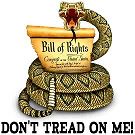
On this day, 217 years ago, the Bill of Rights became law. This was the culmination of literally decades of struggle dating back all the way to the Declaration of Independence. After eight years of bloody conflict, combined with several more years of civil discontent, the United States had finally created a system of laws that proctected individual liberty. James Madison, the origonal mastermind of the Constitution and the Bill of Rights, was able to push this document to the forefront of governmental affairs. For the longest time most of America's early leaders wanted nothing to do with a Bill of Rights, but Madison would not take no for an answer. His political genious and tireless effort finally got the Bill of Rights to be accepted. This document has maintained some of our basic freedoms (more or less) for over two centuries.
Tuesday, November 27, 2007
Remembering the Articles of Confederation

The Articles of Confederation are one of the most neglected and overlooked aspects of the American Revolution. It is often clouded by the grandiose history of the Declaration of Independence and the Constitution (not that those documents are undeserving). Many students today have never even heard of the Articles of Confederation. Though their legacy may not be as grand as other historical documents, no true historian can ignore their massive importance in the American Revolution saga. As historian Donald Lutz of the University of Houston put it:
"The Articles functioned as the first national constitution of the United States and, as such, reflected American political theory as it emerged during the Revolution. Equally important, a textual analysis reveals the extent to which the 1787 Constitution was a logical extension of the Articles of Confederation. Most of the Articles were incorporated in the U.S. Constitution, and several key changes found in the later document were present in embryo in the Articles of Confederation."
To understand the federal government and the Constitution one must first understand the Articles of Confederation. It was an essential first step in shaping American political ideology. One also gains a greater appreciation for the truly remarkable achievement that was the Constitution when we consider that the Articles of Confederation was THE governmental system of the United States. In essence, the Constitutional Convention was a bloodless coup d'etat when we consider the role of the Article of Confederation.
In addition, understanding the Federalist Papers (and anti-Federalist Papers) can only be accomplished with a strong understanding and knowledge of the Articles of Confederation.
Of course we must also keep in mind the limitations of the Articles of Confederation. After all, they were replaced with a more centralized system of government created under the Constitution. James Madison called the Articles, "a blessed stumbling block that re-charted America's course." Despite its faults, the Articles of Confederation should be remembered as a critical stepping-stone in what the founders have called, "The American experiment."
Monday, October 29, 2007
The "Dirty Work" of John Adams

Of all the Founding Fathers, there is perhaps no more confusing character than John Adams. As one of his biographers put it, Adams was a man of "constant highs and lows," he was "plagued with a sense of inferiority" and "an iron will to achieve greatness." Adams "struggled with himself to achieve inner peace and public praise." He was a man who not only had an unconquerable ambition to achieve greatness, and the intellect to back it up, but also sought to cultivate personal humility. This inner battle between the ambitiously vocal Adams and the patiently reserved Adams has provided historians with a valuable insight into the mind of one of our most interesting Founders.
This inner battle within the psyche of John Adams was regularly brought to the service. It comes as no surprise that Adams had a difficult time keeping and making friends. As Joseph Ellis put it, "The only conversation Adams understood was an argument." Understandably, this caused Adams a great deal of stress and problems.
Despite the personal struggles within his own mind, John Adams's accomplishments are truly in a league of their own. Not only was he present for the signing of the Declaration of Independence and the Treaty of Paris, but also became the nation's first Vice-president. As we all know, he would later fill the presidential vacancy left by George Washington, becoming the second President of the United States.
With such an extensive resume, one would think that Adams's place in the pantheon of great Americans would be secure. For Adams, however, such achievements were clouded in a bleak fog of pessimism. Instead of achieving "greatness," Adams went to his grave believing that his role in the revolution would be completely shrouded by the accomplishments of Washington, Franklin and Jefferson. Essentially, Adams would be remembered for the "dirty work" that needed to be done, but brought little recognition. For example, his defense of British soldiers for their "crimes" committed during the Boston Massacre earned him many skeptics. During the Continental Congress, Adams felt that his voice had been overshadowed by the Southern delegates. Later in the second Congress, Adams was assigned (along with Benjamin Franklin) to a committee with the task of drafting the official document of independence. Believing the assignment was to be a side note in history, Adams refused the task of authoring the document. By default, the assignment fell to the youngest member of the committee, Thomas Jefferson. As we all know, Jefferson's name is now synonymous with independence, while Adams is less than an afterthought.
Adams's presidency is another example of his "dirty work." As the successor to George Washington (a figure that was larger than life), Adams was faced with an impossible chore. How did one follow in the shoes of the 6'4" General that secured America's independence? Adams's entire presidency was plagued with such inadequacies. The constant comparisons to Washington, coupled with the growing political factionalism in the nation, left Adams looking like a deer in the headlights. In 1800, Adams would yet again play second fiddle to Thomas Jefferson, losing his bid for a second term.
The plague of being called to do America's "dirty work" seems to be a constant theme throughout the life of John Adams. Though pessimistic about his ultimate place in history, John Adams has been remembered today as the man who did what others could not (or were too afraid to try). Washington, Jefferson and Franklin may have their faces on currency, and be remembered as the "big three" of the revolution, but they can never lay claim to the "dirty work" of the revolution. That distinction rests exclusively with one man.
Sunday, October 21, 2007
Dec. of Independence: Overrated?
As horrible as the title of this blog probably sounds, it is important for us all to remember that the Declaration of Independence (as a document) was seen in a very different light by its contemporaries than it is today. During the Second Continental Congress, while delegates were debating the issue of independence, a committe was created to draft the document. Several senior members (including John Adams and Benjamin Franklin) did not want the chore of drafting the declaration, so the task fell to the youngest member: Thomas Jefferson.
I find it interesting how much the image of the Declaration of Independence has changed over the years. Today we see the declaration (justifyably so) with awe and reverence. This simply wasn't the case during the colonial years. Attached is a great video that Brad sent me that I believes illistrates how awe inspiring the declaration has become in modern times:
I find it interesting how much the image of the Declaration of Independence has changed over the years. Today we see the declaration (justifyably so) with awe and reverence. This simply wasn't the case during the colonial years. Attached is a great video that Brad sent me that I believes illistrates how awe inspiring the declaration has become in modern times:
Subscribe to:
Posts (Atom)